Project overview
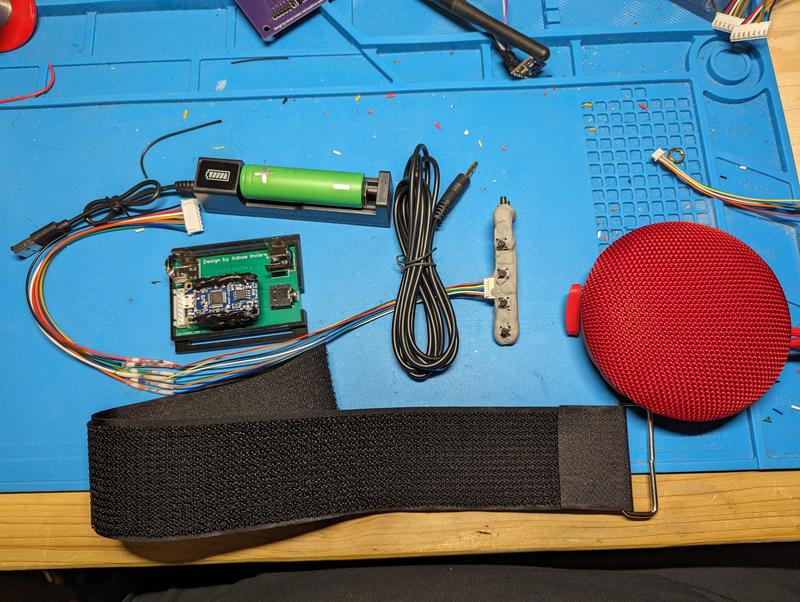
The Universal Soundboard is a hand-held sound trigger for cosplay. A small button strip sits in the palm of the hand, wired back to a carrier board with the audio electronics and an 18650 cell, and the audio leaves through a standard jack to any external speaker. Pressing a button plays a sound; that is the whole interaction.
It was built for a Jawa costume, but nothing about it is specific to that character. The sound set lives on the audio board as ordinary files, so the same hardware works for any costume by copying a different set of sounds onto it.
Volume is deliberately not solved inside the prop. Instead of fitting an amplifier and a speaker that would have to be hidden in a costume, the line output goes to a small AUX speaker box, which is what actually produces the level needed at an event. No particular speaker is specified, and that is the point: AUX-capable speakers are awkward to source and regularly out of stock, so the build treats the loudest component as interchangeable rather than designing around one model.
Everything created for this project is published under CC BY-NC-SA 3.0, with the board design on OSHWLab. Star Wars, the Jawa and all associated names and designs are the property of Lucasfilm and The Walt Disney Company; the costume the board was originally built for is fan-made, and none of those elements are covered by this licence.
Electronics and control
The core is an Adafruit Audio FX Sound Board with 16 MB of onboard flash. It was chosen precisely because it removes most of the project: it stores the sounds, plays them, and triggers directly from a switch closing to ground, with no microcontroller and no firmware in between. What remained to be designed was the trigger side and the power side.
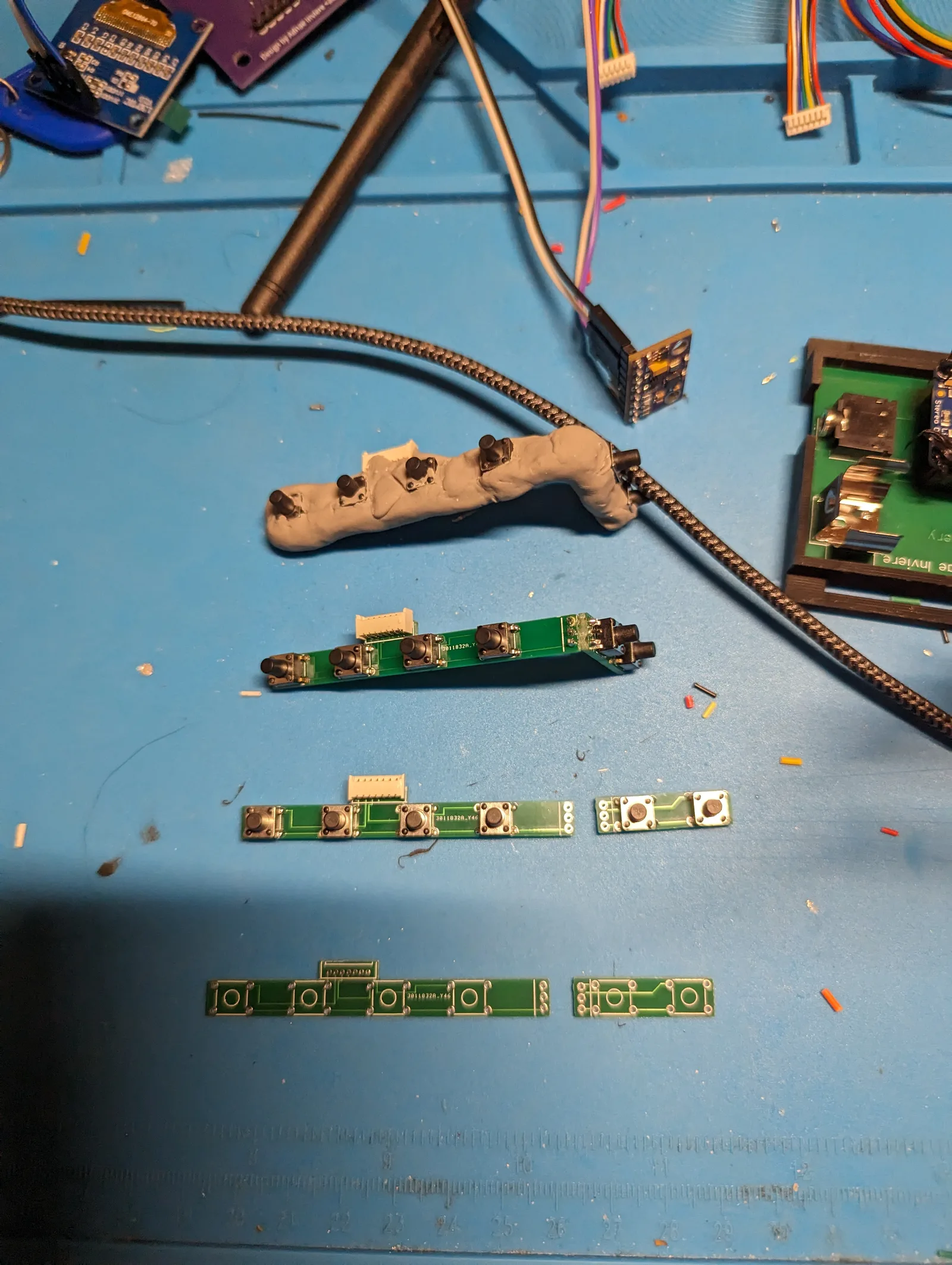
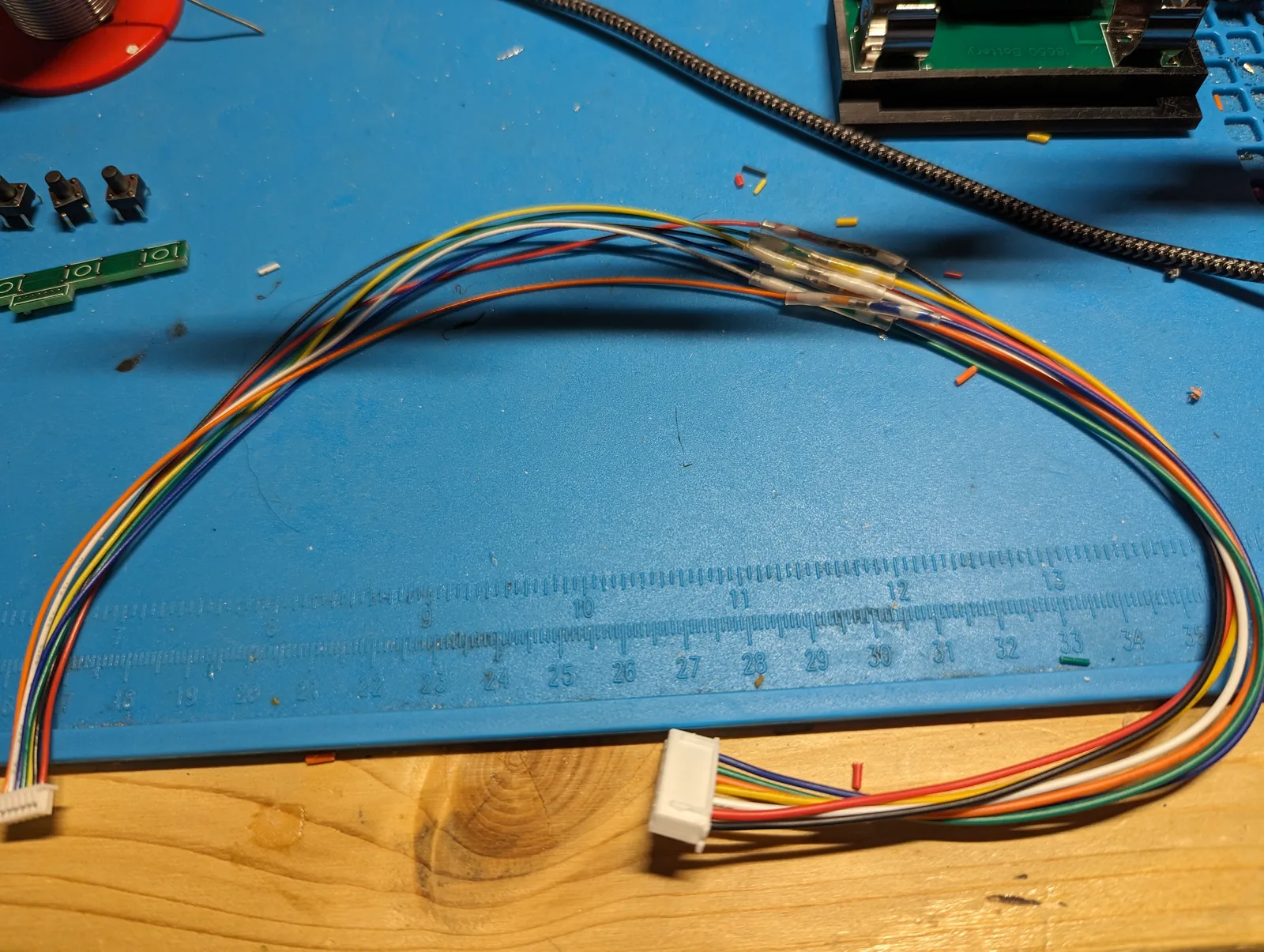
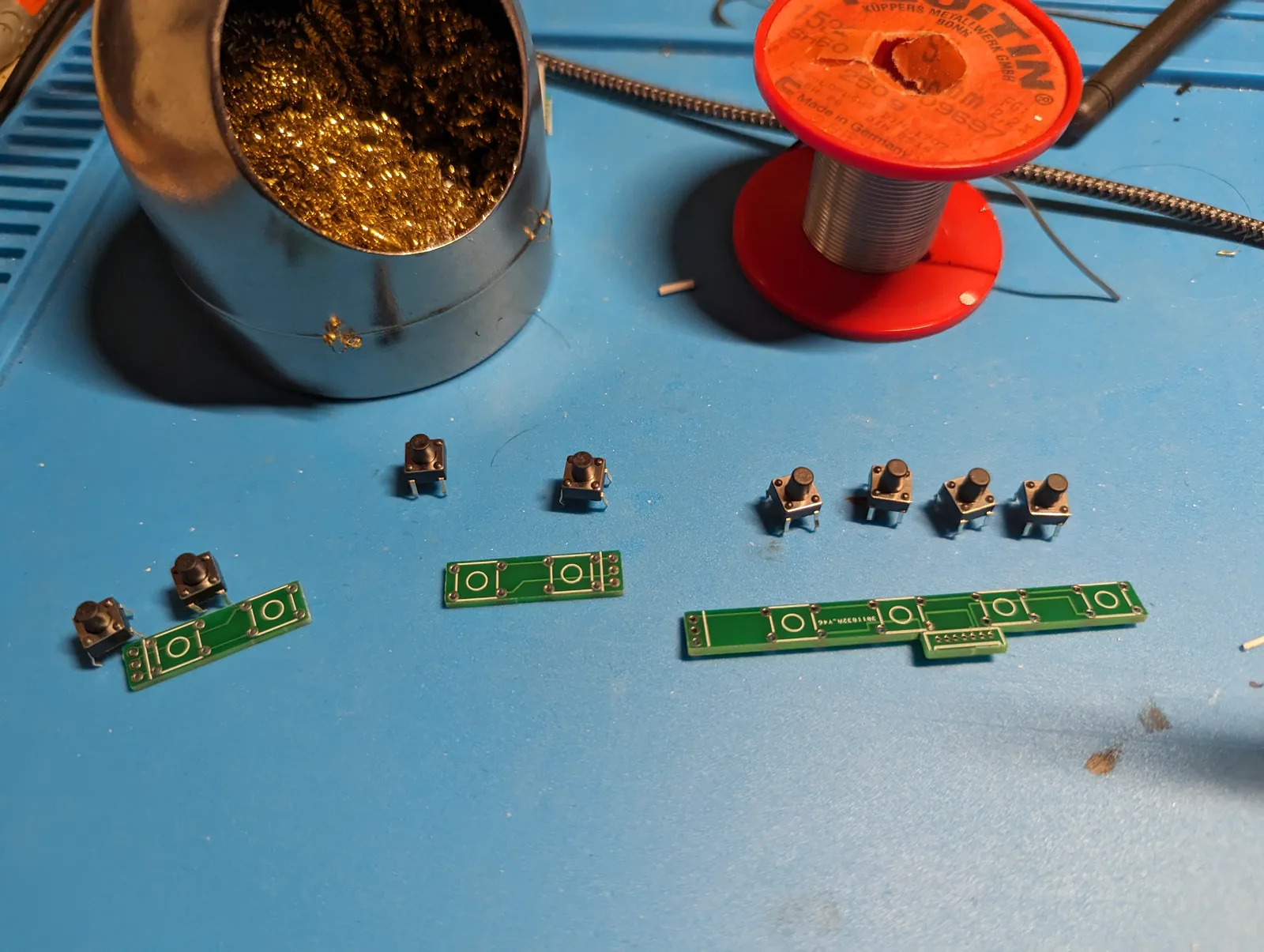
The hand piece is a small board carrying six tactile switches, connected to the carrier board by a harness terminated in 7-pin JST-PH connectors at both ends. The seven conductors are exactly the six triggers plus their common return, which is what sets the connector size. The connectorised harness means the hand piece can be unplugged from the carrier without unthreading a cable through a sleeve.
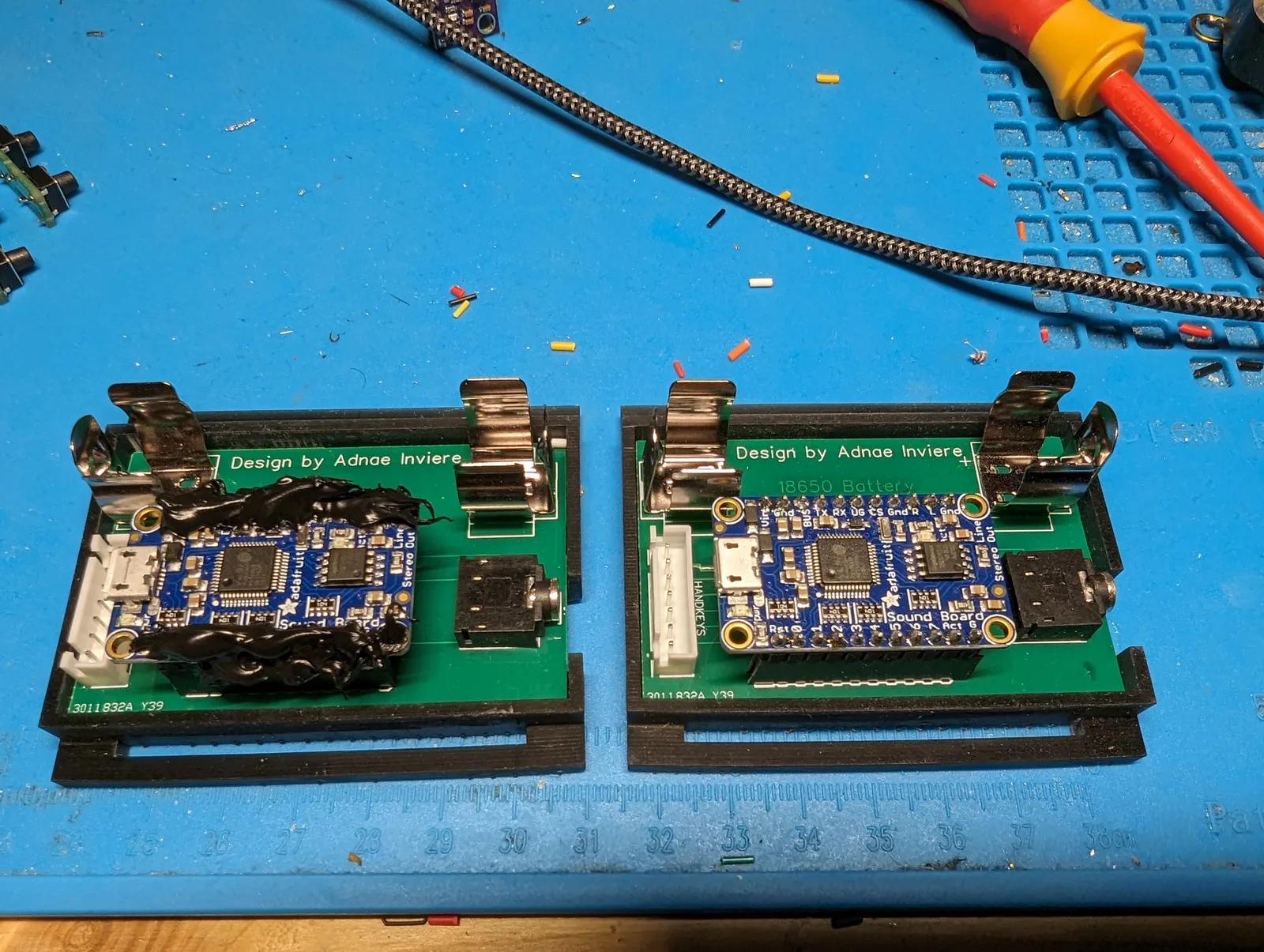
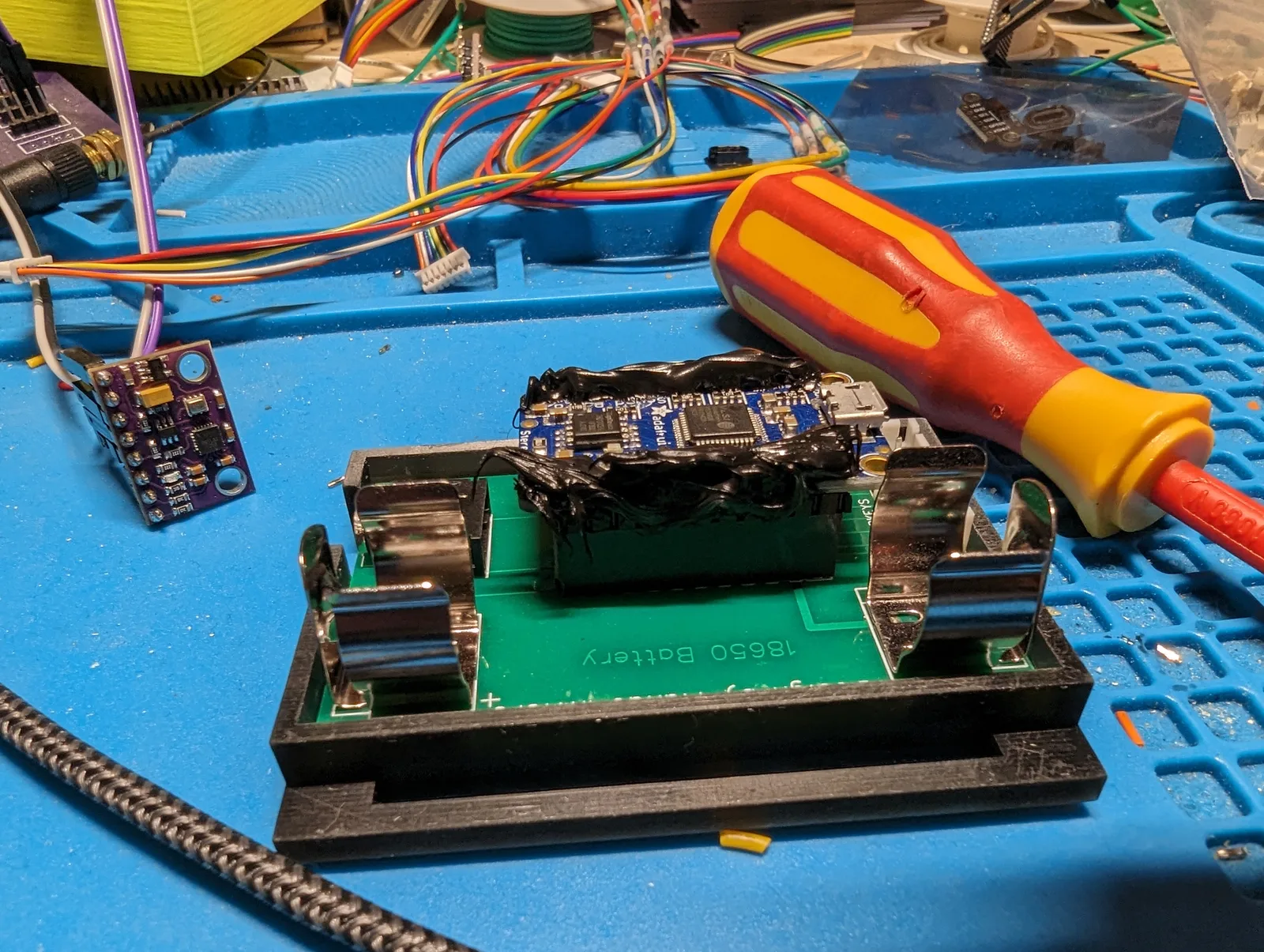
The carrier board holds an 18650 cell in metal clips and provides the mounting and the audio jack for the sound board. Audio leaves at line level, so the output stage is whatever speaker is plugged in.
Mechanical construction
The hand piece is the part that needed real attention. Its board is fully encapsulated in foam, applied around the switch strip and the cable entry and then left to cure, so that the finished piece is a soft shape with the button domes standing proud of it. That does two things at once: it gives the palm something to grip, and it seals the board.
The carrier board sits in a PETG holder, printed on a Qidi X-Max 3, that protects the underside and carries slots for a hook-and-loop strap, so the whole pack straps directly to the forearm and travels with the wearer rather than sitting in a pocket. The strap is plain non-elastic webbing; the printed part does the locating and the strap only has to hold position. The audio module itself is potted, which keeps the connector solder joints from working loose while the pack is worn and moved.
Software
There is none to write. Sounds are named according to the Adafruit board’s trigger convention and copied onto its flash over USB, where the board appears as an ordinary mass storage device. Changing the entire sound set for a different costume is a file copy rather than a build step, which is the main reason the prop is usable beyond the costume it was made for.
Lessons learned
Not every project needs to be built from scratch. The Adafruit board already did the storage, the playback and the trigger logic. Recognising that reduced the whole project to two questions — how to put six buttons in a hand and how to power the thing — and it was finished in a fraction of the time a microcontroller design would have taken.
Sweat attacks an exposed board. A hand piece that is gripped for hours at an event sits in exactly the wrong environment for bare electronics. Encapsulating the trigger board in cured foam solved it, and the insulation has to be part of the design from the start rather than something added once corrosion shows up.
Use a high capacity cell. Battery life is not a specification here, it is a question of whether the costume has to be partly taken off mid-event to reach the pack. Choosing a cell with plenty of margin removes that scenario entirely.